
Structured PHD Programme in Practical Theology
Researching Lived Faith, Religious Practice, and Communal Religious Realities under Contemporary Conditions
Are you thinking about starting a PhD in Practical Theology? Are you excited about empirical research, early-career opportunities as a scholar, and exchanging ideas with other doctoral researchers in your field? Then you are in exactly the right place. Find out whether a PhD in Practical Theology is the right fit for you.
Core Elements

The programme combines individual academic freedom with a reliable and supportive structure, helping doctoral researchers develop as independent scholars within the wider field of Practical Theology.
The seven components outlined above provide an intellectual community, methodological guidance, international academic connections and opportunities to engage with interdisciplinary and global perspectives, together creating a coherent developmental path throughout the doctorate.
Core Competencies
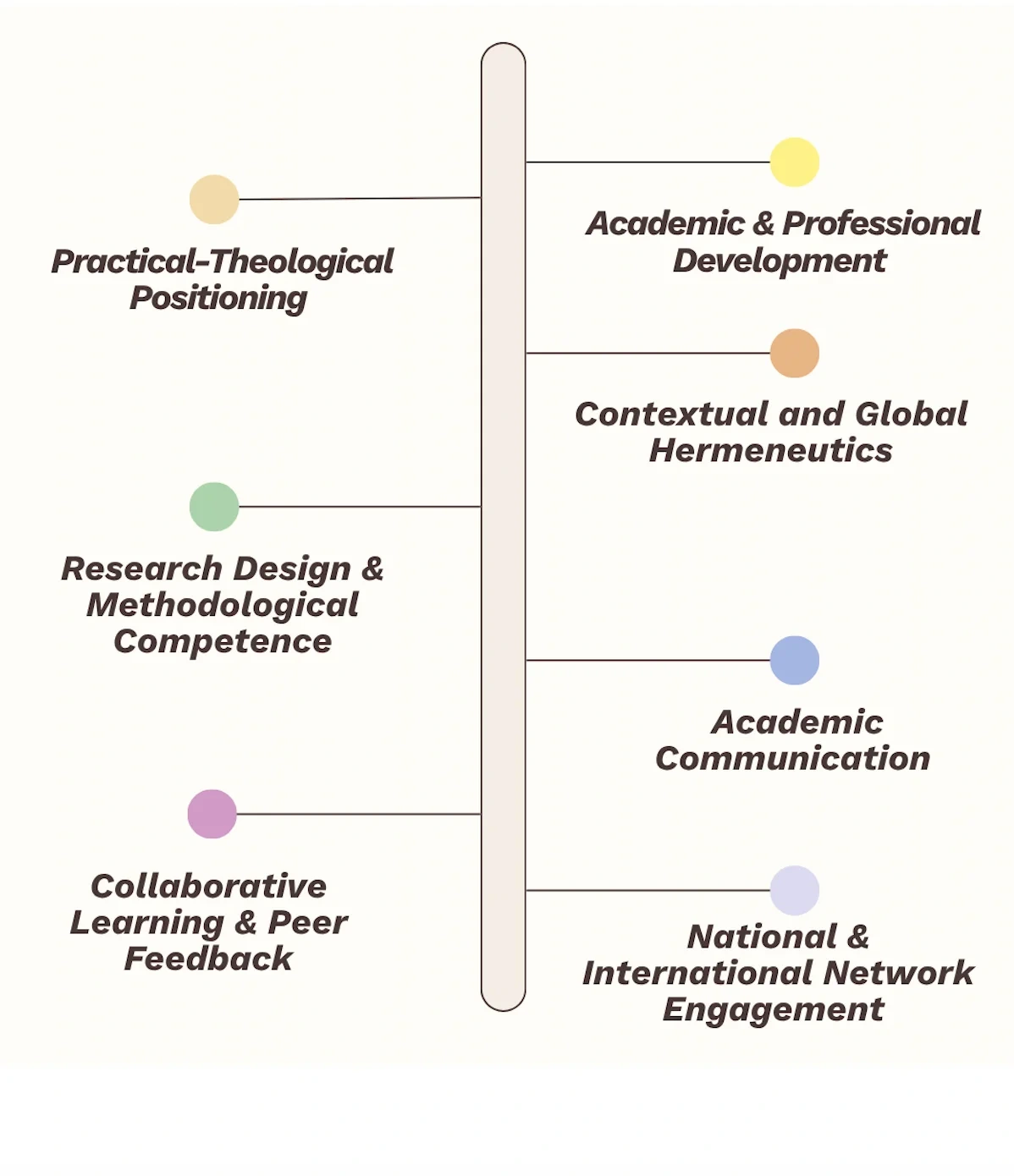
The programme welcomes doctoral researchers working across different areas of Practical Theology and is shaped by a shared thematic horizon: How are lived faith, religious practice, and communal and institutional religious realities researched, interpreted, and transformed under contemporary conditions?
This guiding question does not replace the specific research questions of individual doctoral projects. Rather, it provides a shared practical-theological framework within which diverse topics can be situated, discussed, and brought into conversation with one another. It reflects the programme’s commitment to empirical, theological, and hermeneutical reflection.
Time Frame
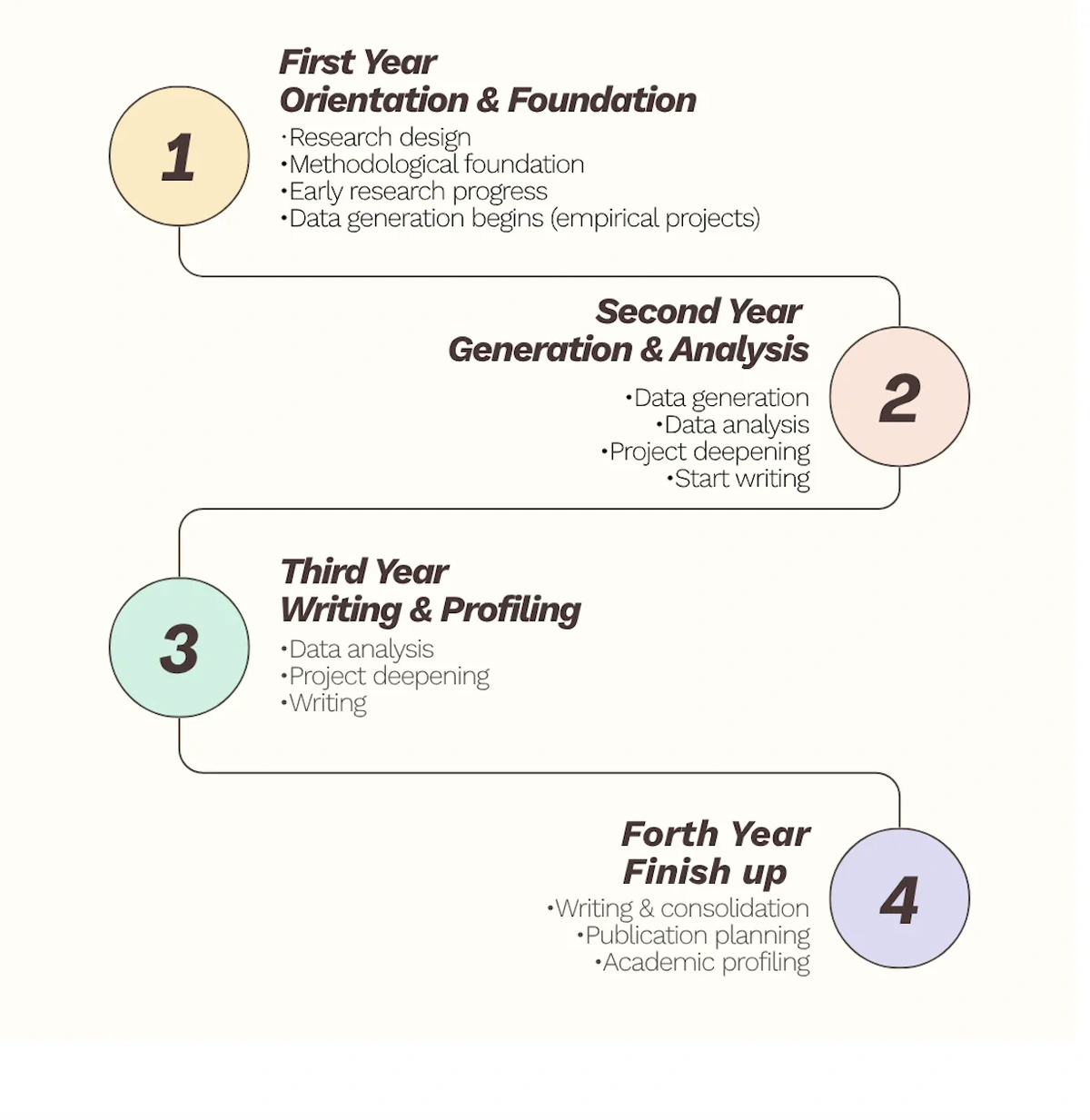
Because doctoral researchers may enter the programme at different points in the academic year, the programme is not organised as a fixed cohort model. Instead, it is structured as a rolling, competence-oriented four-year framework with recurring formats and clear developmental milestones.
Who can apply?
We welcome applicants from all countries who hold a degree in theology, sociology of religion or religious studies. The programme is offered in a hybrid format, with online participation possible. It is conducted in English and therefore requires a high level of English proficiency. It follows a hybrid format.
2–3
Conferences
3–4
Years
multiple
PhD Students with diverse backrounds
Contact
Prof. Dr. Sabrina Müller
3.155
Rabinstraße 8
53111 Bonn

Aline Knapp
3.117
Rabinstraße 8
53111 Bonn